

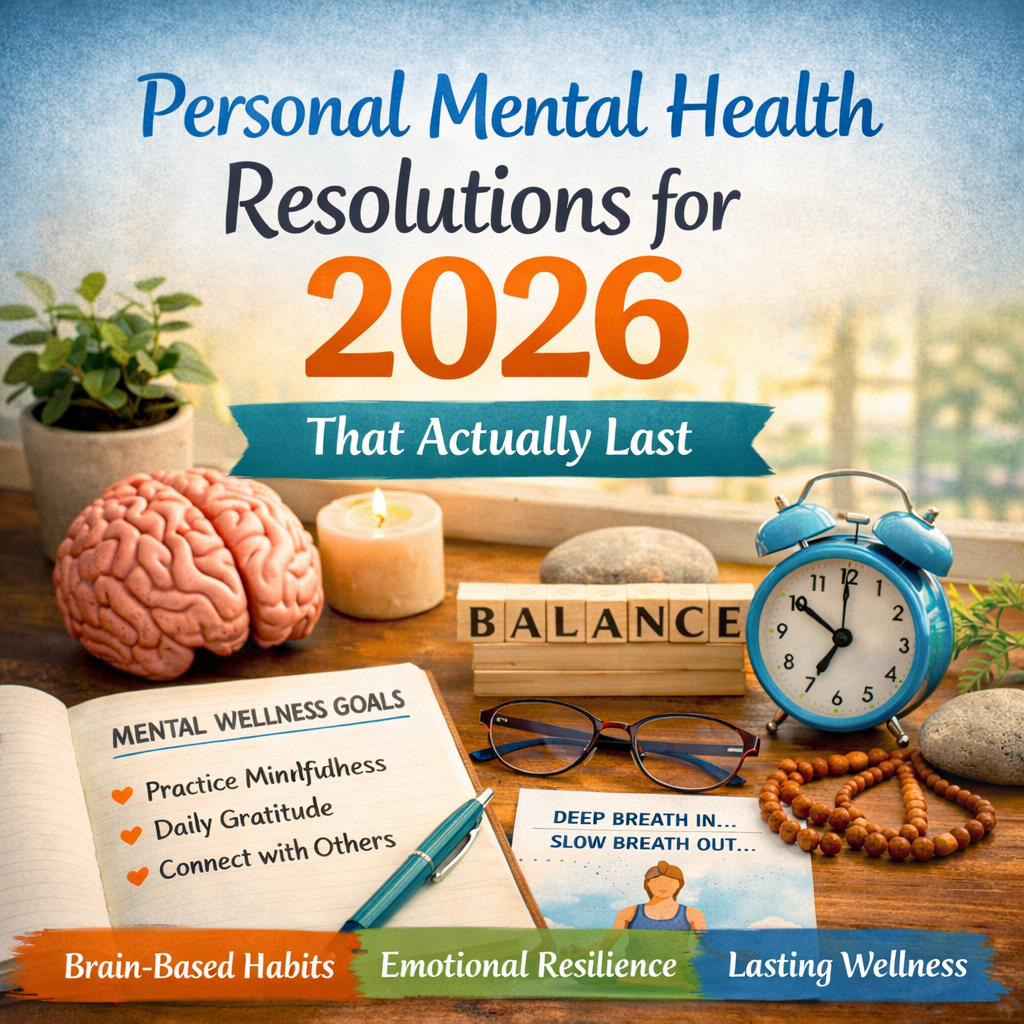
Every new year begins with hope. Many people promise themselves they will finally prioritize their mental health. Yet by February, most resolutions quietly fade. This is not because people lack discipline. It is because most mental health resolutions are built on motivation instead of neuroscience.
Personal mental health resolutions for 2026 must be different. Lasting change happens when goals work with the brain, not against it. When we understand how the nervous system forms habits, emotional wellness becomes sustainable rather than exhausting.
This article explores how to create mental wellness goals that actually last, using brain based strategies aligned with Future Ready Minds programs.
Most resolutions focus on outcomes rather than systems. People aim to feel calmer, less anxious, or more confident. While these goals sound healthy, they lack a process the brain can follow.
The human brain prioritizes safety and efficiency. When goals feel overwhelming or vague, the nervous system interprets them as a threat. Stress increases, motivation drops, and old patterns return.
Another issue is perfection thinking. Many people believe missing one day means failure. This mindset activates shame, which shuts down learning and neuroplasticity. Sustainable mental health goals must feel achievable, flexible, and safe for the brain.
Neuroplasticity refers to the brain’s ability to rewire itself through repeated experiences. Every habit strengthens a neural pathway. The brain does not change through intensity. It changes through consistency.
This means small mental health habits practiced daily create more impact than occasional big efforts. Five minutes of regulation each day is more effective than an hour once a week.
Mental health resolutions for 2026 must focus on repetition, not transformation.
Motivation fluctuates. The nervous system does not. When the nervous system feels regulated, the brain can learn, adapt, and grow. When it feels overwhelmed, survival mode takes over.
Regulation practices calm the body first. This signals safety to the brain and allows emotional resilience to build naturally. Without regulation, even the best intentions collapse under stress.
Instead of pushing yourself to do more, start by calming your nervous system. Simple practices like slow breathing, grounding exercises, or mindful pauses help the brain feel safe.
When the nervous system is regulated, motivation follows naturally.
This resolution alone can change how you approach mental health.
Large goals activate pressure. Micro habits activate success. Choose habits that take five to ten minutes and feel manageable even on hard days.
Examples include journaling one sentence, taking three deep breaths, or stepping outside briefly. These small actions strengthen neural pathways without resistance.
Small habits build mental wealth over time.
Emotional resilience is not a personality trait. It is a skill developed through repeated regulation and reflection.
Instead of avoiding stress, focus on recovering faster after it appears. Ask yourself what helped you return to balance. Each recovery strengthens resilience circuits in the brain.
Resilience grows through practice, not avoidance.
Perfectionism increases anxiety and emotional shutdown. Consistency builds confidence and trust in yourself.
Missing a day does not undo progress. The brain learns from returning, not from never slipping. This mindset keeps the nervous system open to learning rather than fear.
Progress happens when safety replaces self criticism.
Human connection regulates the nervous system more powerfully than any technique. Conversations, laughter, and shared presence release calming neurochemicals that support emotional balance.
In 2026, a powerful mental health resolution is to schedule connection intentionally. This may include family meals, meaningful conversations, or community involvement.
Connection is not a reward. It is a requirement for mental wellness.
Mental wellness does not happen in isolation. Children and teens absorb emotional patterns from adults around them. When caregivers regulate their own nervous systems, children feel safer automatically.
Family based mental health resolutions may include shared screen free time, calm routines, or emotional check ins. These practices teach emotional regulation without lectures or pressure.
Future Ready Minds emphasizes family systems because regulated adults raise regulated children.
Knowledge alone does not create change. Support systems do. Coaching helps individuals translate neuroscience into daily life.
Through guided reflection, accountability, and nervous system education, coaching accelerates habit formation. It also reduces shame by normalizing struggle and progress.
Future Ready Minds programs integrate brain science with practical tools, helping individuals and families build mental wellness systems that last beyond January.
Personal mental health resolutions for 2026 should feel supportive, not demanding. When goals are built around nervous system regulation and neuroplasticity, change becomes sustainable.
Mental wellness is not about fixing yourself. It is about creating safety for growth.
If you are ready to build mental health goals that actually last, explore Future Ready Minds coaching programs designed to support emotional resilience, balance, and long term mental wealth.


.svg)